
Interview by Caitlin McLintock
To celebrate Women’s Month, I sat down with Palesa Maloka, Consultant at Stratum International to reflect on her journey as a young woman contributing to the mining sector.
Palesa supports senior leadership appointments across the industry, working with executive teams to identify talent capable of shaping the future of mining. She brings a thoughtful, people‑centred approach to her work, rooted in her passion for inclusive leadership.
Alongside her role at Stratum International, she serves on the committee for Women In Mining South Africa (WIMSA), supporting initiatives that promote visibility, inclusion and equitable opportunities for women across the mining career pipeline.
Our discussion explored her motivations, her experience entering a historically male‑dominated sector and her advice for young women considering careers in mining.
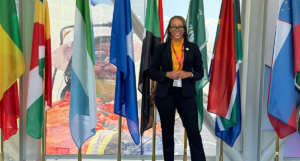
What inspired your interest in mining, and what continues to drive your passion?
“My entry into mining was unexpected. I stumbled into the sector, though not into consulting. I studied Organisational Psychology and enjoyed understanding how people influence businesses, both commercially and psychologically, so I always knew I wanted to work in human capital consulting.
My connection to mining has always been part of my story. My uncles from my father’s side worked underground in rural Free State, South Africa, so I grew up aware of the stability the sector provides and the impact it has on livelihoods. I also had a natural curiosity about the broader natural resources sector and the role it plays in building economies and shaping the world we live in.
In my final year of university, while exploring post-graduation options, I came across Stratum’s Graduate Programme on LinkedIn. It brought together everything I was passionate about: human capital, leadership and organisational design, combined with an industry that had always been present in my life. I remember feeling incredibly curious, and that curiosity has really been the foundation of my passion for the industry.
Mining is complex, interconnected and globally significant. Every week I am reminded of the scale of its impact on economies, communities and families. Being even a single contributor within such a massive ecosystem gives me a real sense of purpose. I learn something new every day, and seeing the influence of effective leadership in this sector continues to inspire and motivate me.”
What has your journey at Stratum International taught you about the industry and about yourself?
“Professionally, I have come to understand how broad and complex the mining industry is. Once you are inside it, you see that it spans operations, innovation, sustainability, community relationships and geopolitics. Stratum has given me the landscape to develop a deep understanding of this ecosystem. Mining involves many different stakeholders, and it has been eye opening to view the industry through the lens of leadership and to understand what effective mining leadership looks like.
To consult to the sector, I have had to learn, and I am still learning, about the history of mining and the history of leadership in the industry. Seeing how decisions at the top shape entire organisations has shown me how identifying the right leaders creates long term strategic impact. That perspective has influenced how I think about the future of the sector and how I can contribute to it.
Personally, the journey has been transformative. I once thought I was more reserved, but my role has shown me how much I enjoy connecting with people. My engagements with candidates, clients and senior executives have taught me to appreciate the art of human connection. Understanding client challenges and learning what candidates are looking for as they move into the next step of their leadership careers has made me really value the people and humanity side of my work.
I have grown in confidence and strengthened my communication skills. I have also learned that regardless of seniority, we are all people first. I am learning not to underestimate my perspective. Curiosity, preparation and thoughtful insight allow me to contribute meaningfully, even as a young professional.”
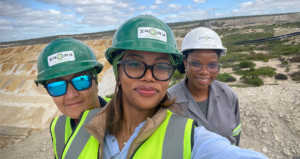
As a young woman in mining, what strengths do you feel you bring to your work?
“I bring diversity of thought. Being early in my career means I am not shaped by long‑standing industry patterns, so I ask different questions and imagine new possibilities. This is valuable during a time of technological change, sustainability requirements and shifting leadership expectations.
I also bring a future‑focused mindset. Much of our work involves anticipating what organisations will need years from now. Because I am at the start of my own journey, thinking long term comes naturally to me. I think about culture, leadership models and the mindset future leaders will need.
As a young woman, I also offer lived experiences that challenge traditional norms. Representation matters, but contributing to conversations about inclusivity, leadership styles and the expectations of younger generations is equally important.”
Why do visibility and representation matter for women in mining?
“Visibility matters because you cannot aspire to something you cannot see. Many young women do not consider mining simply because they do not see people like them thriving in the sector.
Representation also affects retention and progression. Many women enter mining, but fewer advance to senior or executive roles because pathways can feel unclear or inaccessible.
Organisations like WIMSA and Women In Mining UK (WIM UK) are essential. They create community, offer mentorship and highlight success stories. Seeing women build fulfilling careers in mining shows younger women that there is space for them.
Representation at leadership level also strengthens organisations. Diverse perspectives lead to better decisions, especially in a sector as complex as mining.”
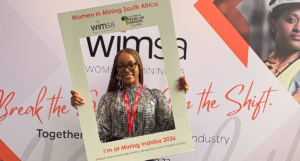
What advice would you give to young women considering a career in mining or talent consulting?
“My advice centres on access, preparation and skill building –
Access: This starts with visibility and representation – you don’t know what you can’t see. Before anything else, it’s about understanding what opportunities actually exist. This isn’t just specific to the mining sector; it applies to careers in general. Young people need exposure to different paths so they can see what’s possible and begin to understand what they might want to pursue.
Preparation: Once you have access, preparation becomes your advantage. Research the company, the asset and the people you will engage with. Preparation builds confidence and helps you add value.
Skill building: Develop the strengths that make you unique. For me, that includes inclusive leadership thinking, emotional intelligence and a future‑focused approach. Build skills that shape your professional identity.”
What excites you most about the future of your career?
“I am excited to continue doing work that has purpose. Leadership decisions influence companies, communities and entire ecosystems. Contributing to who steps into those leadership roles is a responsibility I value.
I am excited to keep learning, remain curious and watch how the leaders we work with evolve their organisations.
Mining is changing, and being part of that evolution feels meaningful. It feels bigger than me, and that is what motivates me every day.”
Find out how to connect with Palesa here.